
Wondering what it costs to rewire your Sydney home? I’ll give you the unvarnished truth. Full house rewiring typically costs $6,000-$20,000, with most homeowners paying around $8,000-$12,000 for a standard three-bedroom property. Let me break down exactly what you’ll pay—and why it’s worth every cent.
Quick Price Guide: House Rewiring Sydney
Before we dive into details, here’s what you’re looking at:
Standard Rewiring Costs by Property Size
- One-bedroom apartment: $3,500-$6,000
- Two-bedroom unit: $5,000-$8,500
- Three-bedroom house: $8,000-$12,000
- Four-bedroom house: $12,000-$18,000
- Five+ bedroom house: $18,000-$30,000+
Cost Breakdown by Component
- Electrical cable and wiring: $2,000-$6,000
- Switchboard upgrade: $2,000-$4,000
- Power points and switches: $1,500-$4,000
- Light fittings installation: $800-$2,500
- Labour costs: $3,000-$10,000
- Testing and certification: $300-$800
Additional Services That Affect Cost
- Asbestos removal: $1,000-$5,000
- Wall patching and painting: $1,500-$4,000
- Smart home integration: $1,000-$5,000
- Solar panel preparation: $500-$1,500
- Data and communication cabling: $800-$2,500
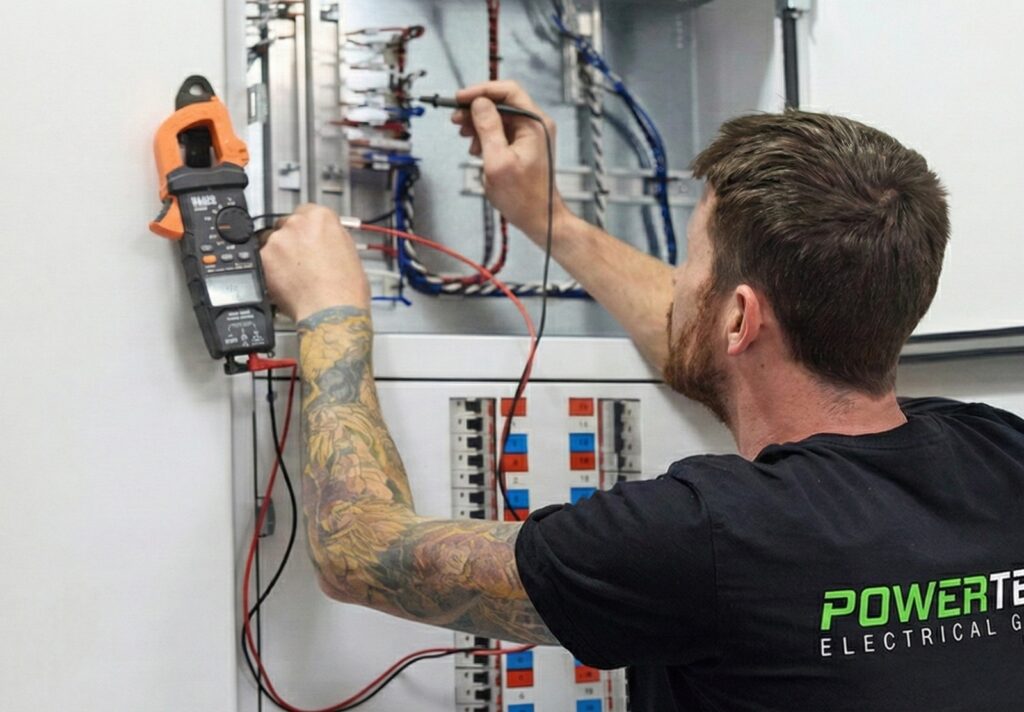
Understanding House Rewiring
House rewiring replaces your entire electrical system. It’s like giving your home a complete electrical makeover from top to bottom.
The process involves stripping out old wiring. New cables, switches, power points, and safety devices get installed throughout your property.
Why Houses Need Rewiring
Old wiring is dangerous—plain and simple. Electrical systems weren’t designed to handle today’s power demands.
Critical rewiring reasons:
- Fire prevention and electrical safety
- Outdated wiring (cloth-insulated, rubber, aluminium)
- Insufficient power points for modern life
- No safety switches or RCD protection
- Frequent circuit breaker tripping
- Flickering lights and power fluctuations
- Burning smells or scorch marks
- Property over 40 years old
- Major renovation requirements
- Insurance compliance needs
Signs Your Home Needs Rewiring
Don’t wait for electrical failure or fire. These warning signs demand immediate professional assessment.
Urgent rewiring indicators:
- Two-pin power points throughout house
- Ceramic fuse box instead of switchboard
- Lights dimming when appliances start
- Frequent blown fuses or tripped breakers
- Sparking from outlets or switches
- Hot or discoloured switch plates
- Buzzing sounds from electrical fittings
- Burning plastic smell near outlets
- Shock sensations touching switches
- Extension cords used extensively
Legal and Safety Requirements
Australian standards mandate specific safety features. Modern rewiring must comply with AS/NZS 3000:2018.
Mandatory compliance includes:
- RCD protection on all circuits
- Minimum number of power points per room
- Proper earthing throughout property
- Smoke alarm hardwiring requirements
- Waterproofing in wet areas
- Licensed electrician installation only
- Certificate of Compliance issuance
Breaking Down Rewiring Costs
Labour Charges
Labour represents 40-60% of total rewiring cost. Sydney electricians charge $100-$150 per hour for licensed work.
Typical project timeframes:
- One-bedroom apartment: 2-3 days = $2,400-$4,500
- Two-bedroom unit: 3-4 days = $3,600-$6,000
- Three-bedroom house: 5-7 days = $6,000-$10,500
- Four-bedroom house: 7-10 days = $8,400-$15,000
- Large property: 10-15+ days = $12,000-$22,500+
Factors affecting labour time:
- Property age and construction type
- Accessibility of ceiling and wall cavities
- Number of power points required
- Complexity of existing installation
- Whether property is occupied during work
Materials and Equipment
Quality materials ensure long-term safety and reliability. Cheap components fail prematurely and create hazards.
| Component | Cost Per Unit | Quantity (3-bed) | Total Cost |
|---|---|---|---|
| Electrical cable (per metre) | $3-$8 | 200-400m | $600-$3,200 |
| Power points | $15-$45 | 30-50 | $450-$2,250 |
| Light switches | $12-$35 | 15-25 | $180-$875 |
| Circuit breakers | $25-$80 | 12-20 | $300-$1,600 |
| RCD safety switches | $80-$150 | 2-4 | $160-$600 |
| Switchboard | $400-$800 | 1 | $400-$800 |
| Junction boxes | $5-$15 | 20-40 | $100-$600 |
Switchboard Replacement
New switchboard installation is essential during rewiring. Old fuse boxes can’t accommodate modern safety requirements.
Switchboard upgrade includes:
- Modern circuit breaker board: $400-$800
- RCD safety switches: $160-$600
- Main switch installation: $60-$120
- Surge protection: $150-$350
- Circuit labelling: $30-$80
- Installation labour: $600-$1,200
Total switchboard cost: $2,000-$4,000 including labour and materials.
Power Points and Switches
Modern homes need far more power points. Building codes specify minimum quantities per room.
Standard requirements:
- Living room: 6-10 power points
- Bedrooms: 4-6 points each
- Kitchen: 8-12 points (dedicated circuits)
- Bathrooms: 2-3 points (RCD protected)
- Laundry: 3-4 points
- Garage/workshop: 4-8 points
Installation costs:
- Standard power point: $150-$250 installed
- USB-integrated point: $200-$300
- Weatherproof outdoor point: $180-$280
- Light switch: $100-$180
- Dimmer switch: $150-$250
Testing and Certification
Comprehensive testing ensures safe, compliant installation. Licensed electricians must certify all work.
Testing procedures include:
- Insulation resistance testing
- Earth continuity verification
- Polarity checks
- RCD trip time testing
- Circuit load balancing
- Final safety compliance
Certification costs: $300-$800, typically included in overall quote.
Factors Affecting Rewiring Cost
Property Age and Construction
Older homes cost more to rewire. Heritage properties present unique challenges requiring specialist knowledge.
Age-based considerations:
- Pre-1950s homes: Highest cost, complex access, heritage restrictions
- 1950s-1970s: Moderate cost, potential asbestos issues
- 1980s-1990s: Lower cost, standard construction
- 2000s+: Lowest cost, modern building methods
Construction type impact:
- Weatherboard: Easiest access, lower cost
- Brick veneer: Moderate difficulty
- Double brick: Hardest access, highest cost
- Concrete: Requires conduit installation, expensive
Property Size and Layout
Larger properties need more materials and labour. Complex layouts increase installation difficulty.
Size-based pricing:
- Apartment (50-80m²): $3,500-$6,000
- Small house (80-120m²): $6,000-$9,000
- Medium house (120-180m²): $8,000-$13,000
- Large house (180-250m²): $12,000-$18,000
- Very large (250m²+): $18,000-$30,000+
Accessibility Challenges
Difficult access increases labour time significantly. Some properties require creative solutions.
Access complications:
- No roof cavity access: +20-30% cost
- Concrete slab foundation: +25-40% cost
- Multi-storey without subfloor: +15-25% cost
- Occupied during work: +10-20% cost
- Heritage restrictions: +30-50% cost
Asbestos Considerations
Asbestos presence complicates rewiring dramatically. Safe removal requires licensed specialists.
Asbestos-related costs:
- Asbestos testing: $300-$600
- Licensed removal: $1,000-$4,000
- Safe disposal: $200-$500
- Air quality testing: $300-$700
Properties built before 1990 likely contain asbestos in switchboards, ceiling panels, or wall sheeting.
Additional Features
Modern homes benefit from advanced electrical features. These add cost but provide significant value.
Popular upgrades:
- Smart home wiring: $1,000-$5,000
- Data/ethernet cabling: $800-$2,500
- Solar panel preparation: $500-$1,500
- EV charger circuit: $600-$1,200
- Outdoor lighting: $500-$2,000
- Security system wiring: $400-$1,500
- Home theatre cabling: $600-$2,000
The Rewiring Process Explained
Initial Assessment and Quote
Professional assessment determines exact requirements. Licensed electricians inspect your property thoroughly.
Assessment includes:
- Existing wiring condition evaluation
- Asbestos identification
- Access point assessment
- Power point requirement calculation
- Switchboard upgrade needs
- Future requirement discussion
- Detailed written quote preparation
Planning and Preparation
Proper planning minimises disruption and cost. Your electrician coordinates all necessary approvals.
Pre-work requirements:
- Power disconnection scheduling
- Permit applications if required
- Asbestos removal coordination
- Materials ordering
- Timeline establishment
- Temporary accommodation planning (if needed)
Installation Phase
Rewiring typically occurs in systematic stages. Professional teams work methodically through each area.
Standard installation sequence:
- Power isolation and old wiring removal
- New cable routing through cavities
- Switchboard installation and wiring
- Power point and switch installation
- Light fitting connections
- Testing and quality checks
- Power restoration and final testing
Completion and Certification
Comprehensive testing verifies safe operation. Licensed electricians issue compliance certificates.
Final deliverables:
- Complete electrical testing
- Certificate of Compliance
- Circuit diagram documentation
- Safety switch testing confirmation
- Warranty documentation
- Operational walkthrough
Money-Saving Strategies
Combine with Renovations
Rewiring during renovations saves significant money. Open walls eliminate costly access work.
Renovation timing benefits:
- No wall patching required
- Reduced labour time (easier access)
- Single project management
- Coordinated tradespeople scheduling
- Potential 20-30% overall savings
Staged Approach
Partial rewiring spreads costs over time. Prioritise critical areas first.
Staged rewiring strategy:
- Stage 1: Switchboard and safety switches
- Stage 2: Kitchen and bathroom circuits
- Stage 3: Bedroom circuits
- Stage 4: Living areas
- Stage 5: Outdoor and garage
Warning: Staged work costs more overall than complete rewiring in one project.
Choose Appropriate Features
Don’t overspend on unnecessary premium features. Match specifications to actual needs.
Smart choices:
- Standard power points in hidden locations
- Premium finishes only in visible areas
- Smart wiring in key rooms only
- Future-proof main circuits
- Quality over aesthetics in safety components
Off-Peak Scheduling
Timing affects pricing significantly. Electricians offer better rates during quieter periods.
Cost-effective timing:
- Book 4-8 weeks in advance
- Schedule during winter months
- Avoid peak summer demand
- Weekday work (not weekends)
- Don’t wait for emergencies
Why DIY Rewiring Is Illegal
Legal Consequences
Australian law absolutely prohibits unlicensed electrical work. Penalties are severe and non-negotiable.
Legal ramifications:
- Fines up to $40,000 for individuals
- Criminal charges for serious breaches
- Complete home insurance invalidation
- Compulsory disclosure when selling property
- Personal liability for any accidents
- Forced rectification at your expense
Safety Risks
Electrical work is inherently dangerous. Amateur mistakes cause deaths and devastating fires.
DIY dangers include:
- Electrocution (potentially fatal)
- House fires from poor connections
- Electric shock injuries
- Property damage
- Family member injuries
- Appliance destruction
Financial Consequences
DIY work costs far more than professional installation. Rectification exceeds original proper installation costs.
Hidden DIY costs:
- Complete re-rewiring by licensed professional
- Insurance claim rejections
- Property value reduction
- Legal liability exposure
- Buyer negotiation leverage loss
What Powertech Electrical Group Charges
We believe in transparent, competitive pricing. Our rewiring rates reflect quality workmanship and full compliance.
Our standard packages:
- One-bedroom apartment: $4,200-$5,800
- Two-bedroom unit: $6,500-$8,200
- Three-bedroom house: $9,500-$11,800
- Four-bedroom house: $13,500-$17,200
- Custom quotes: For larger or complex properties
What’s included:
- Complete property assessment
- Premium cable and components
- Full switchboard upgrade
- All required power points and switches
- RCD safety switch protection
- Comprehensive testing
- Compliance certification
- 12-month workmanship warranty
- Lifetime technical support
- Clean-up and debris removal
Our promise: Fixed-price quotes with no hidden surprises. What we quote is what you pay.
Questions to Ask Your Electrician
Licensing and Insurance
Always verify credentials before hiring. Request specific documentation.
Essential questions:
- “What’s your electrical contractor license number?”
- “Can I verify your license online?”
- “What’s your public liability insurance amount?”
- “Do you carry workers compensation insurance?”
- “How long have you been rewiring homes?”
- “Can you provide recent customer references?”
Detailed Scope Clarification
Get everything in writing before work begins. Verbal quotes lead to disputes.
Scope questions:
- “Can you provide an itemised written quote?”
- “What exactly is included in this price?”
- “What’s not included that might cost extra?”
- “What brands and quality of materials?”
- “How will you handle asbestos if found?”
- “What’s your warranty on workmanship?”
- “What’s the payment schedule?”
Project Timeline
Understand realistic timeframes and disruption. Plan accordingly for your family.
Timeline questions:
- “How long will the complete job take?”
- “Will we need alternative accommodation?”
- “How long will power be off each day?”
- “What preparation should we do?”
- “When can you start and finish?”
- “What happens if problems are discovered?”
Red Flags When Hiring
Unlicensed Operators
Never hire unlicensed electricians for rewiring. The risks vastly outweigh any perceived savings.
Warning signs:
- Can’t provide license number immediately
- Reluctant to show insurance certificates
- Offers suspiciously cheap rates
- Demands cash-only payment
- No business premises or ABN
- Won’t provide written quotes
- No verifiable references
Vague Quotes
Detailed quotes protect both parties. Vagueness suggests hidden costs ahead.
Quote red flags:
- No itemised breakdown
- Verbal estimates only
- Massive price ranges (“$5,000-$20,000”)
- Missing material specifications
- No timeline provided
- Unclear payment terms
- No warranty mentioned
Pressure Tactics
Professional electricians don’t pressure clients. Aggressive tactics indicate desperation.
Pressure indicators:
- “Today only” discount demands
- Immediate deposit requirements
- Reluctance to allow comparison shopping
- Aggressive follow-up calls
- Fabricated urgent safety claims
- Pushing unnecessary premium options
Long-Term Value of Professional Rewiring
Cheap rewiring costs more long-term. Quality work ensures safety and reliability for decades.
Quality rewiring benefits:
- 40+ years of safe, reliable operation
- Complete family safety protection
- Full insurance coverage validity
- Building code compliance assurance
- Substantial property value increase
- Reduced ongoing maintenance costs
- Future electrical capacity
- Energy efficiency improvements
- Peace of mind
Poor rewiring consequences:
- Electrical fires and safety hazards
- Premature system failure
- Voided insurance coverage
- Failed building inspections
- Expensive rectification requirements
- Property sale complications
- Legal liability exposure
- Family safety risks
The real question isn’t cost—it’s value and safety. Professional rewiring protects your most important assets.
Your Next Steps
Ready to rewire your Sydney home? Don’t rush into the first quote you receive.
Smart approach:
- Document all electrical issues you’ve noticed
- Photograph your current switchboard and wiring
- Get 2-3 written quotes from licensed electricians
- Verify all licenses and insurance thoroughly
- Compare scope and value, not just price
- Check references and online reviews
- Ask questions until completely confident
- Choose based on expertise and trust
Contact Powertech Electrical Group for professional house rewiring. We’ll assess your property, explain all options clearly, and provide transparent fixed-price quotes.
Remember: Your home’s electrical system protects your family’s safety and your property investment. Choose wisely, invest properly, and enjoy decades of reliable, safe electrical service.
Your family’s safety isn’t negotiable. Trust licensed professionals who prioritise quality, compliance, and long-term value over quick profits.
- About the Author
- Latest Posts
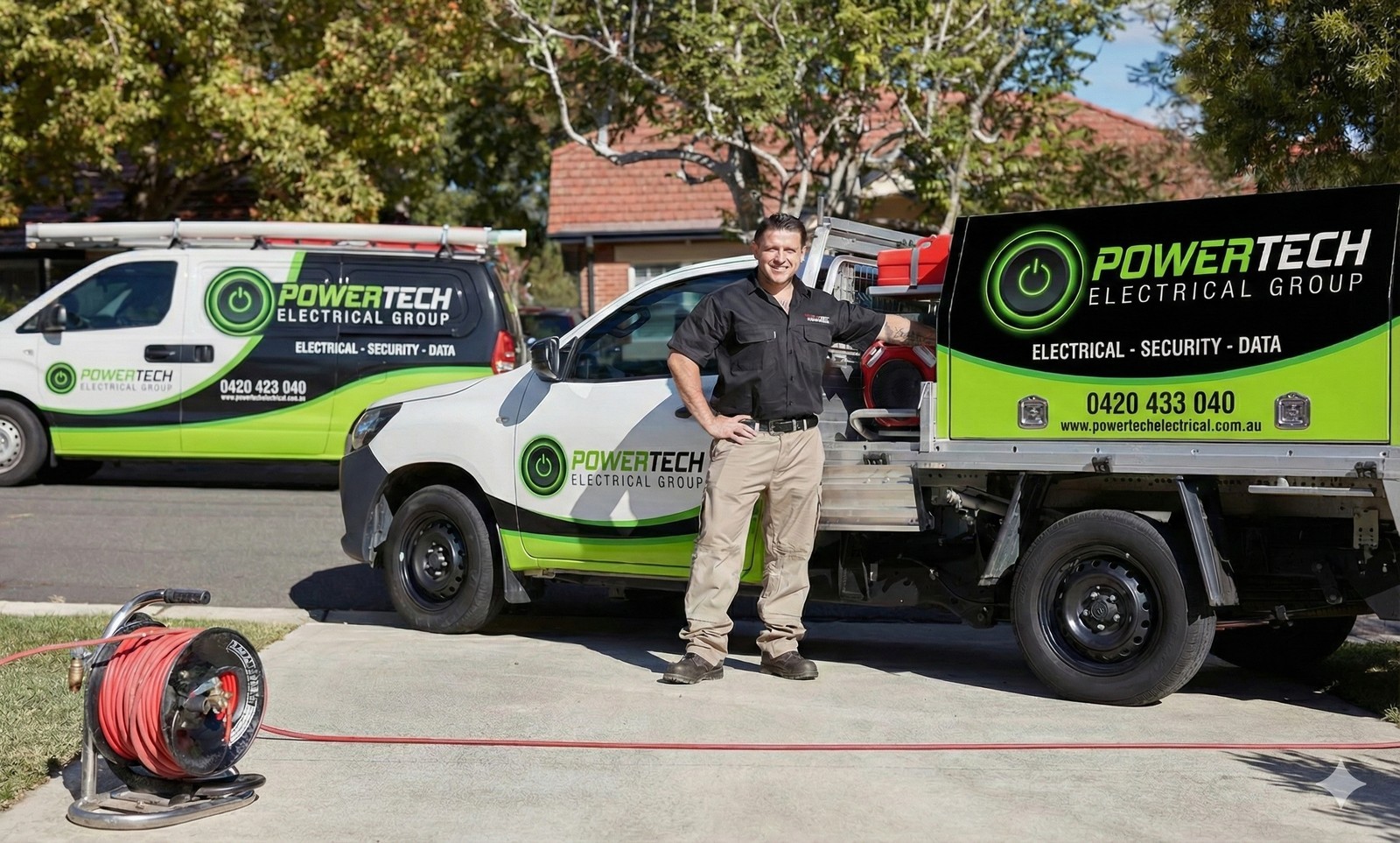
Mario Kyriacou
Owner & Licensed Master Electrician | Powertech Electrical
25+ Years Experience
Licence #319066C
Inner West Sydney
52+ Five-Star Reviews
I am Mario Kyriacou, Owner and Licensed Master Electrician at Powertech Electrical in Sydney’s Inner West. With over 25 years of experience serving residential and commercial properties across Newtown, Marrickville, Leichhardt, Stanmore, Petersham and Ashfield, I’ve built Powertech on the principles of transparency, reliability and quality workmanship.
I attribute the success of Powertech Electrical to a simple philosophy: treat every customer’s home with respect, provide honest upfront pricing, and do electrical work I’m proud to put my name on. After a quarter-century in this industry, I’ve learned that what Inner West homeowners value most isn’t flashy marketing – it’s an electrician who actually shows up when promised, tells you the price before starting work, and does the job properly the first time.
I believe transparency is essential in the trades. That’s why every quote I provide includes a detailed breakdown of labour and materials before any work begins. The quote you receive is the price you pay – no surprises, no hidden fees, no “oh actually it’s more” when the job is finished. This straightforward approach has earned Powertech Electrical 52+ five-star Google reviews from satisfied Inner West customers.
Whether it’s a 2am emergency power outage or a planned kitchen renovation, I personally answer the phone at 0420 433 040. When you call Powertech, you’re speaking with a real electrician who can answer your questions immediately – not a call centre taking messages. This personal accountability matters to me, and I know it matters to the families and businesses who trust me with their electrical work.
I’m proud to be fully licensed (Contractor Licence #319066C), hold professional membership with Master Electricians Australia, and carry $20M Public Liability Insurance for complete customer protection. I maintain current police checks and ID verification as part of my commitment to providing safe, trustworthy service to Inner West homes and businesses.
Running a family-owned electrical business for 25+ years has taught me that success isn’t about being the biggest company – it’s about being the most reliable. It’s about earning the trust of every customer, one transparent quote and one quality installation at a time. That’s the Powertech guarantee, and it’s the standard I hold myself to on every single job.
Need a Licensed Electrician?
Speak directly with Mario for transparent pricing and professional electrical service across Inner West Sydney
0420 433 040
Available 24/7 for emergencies | Same-day quotes for installations